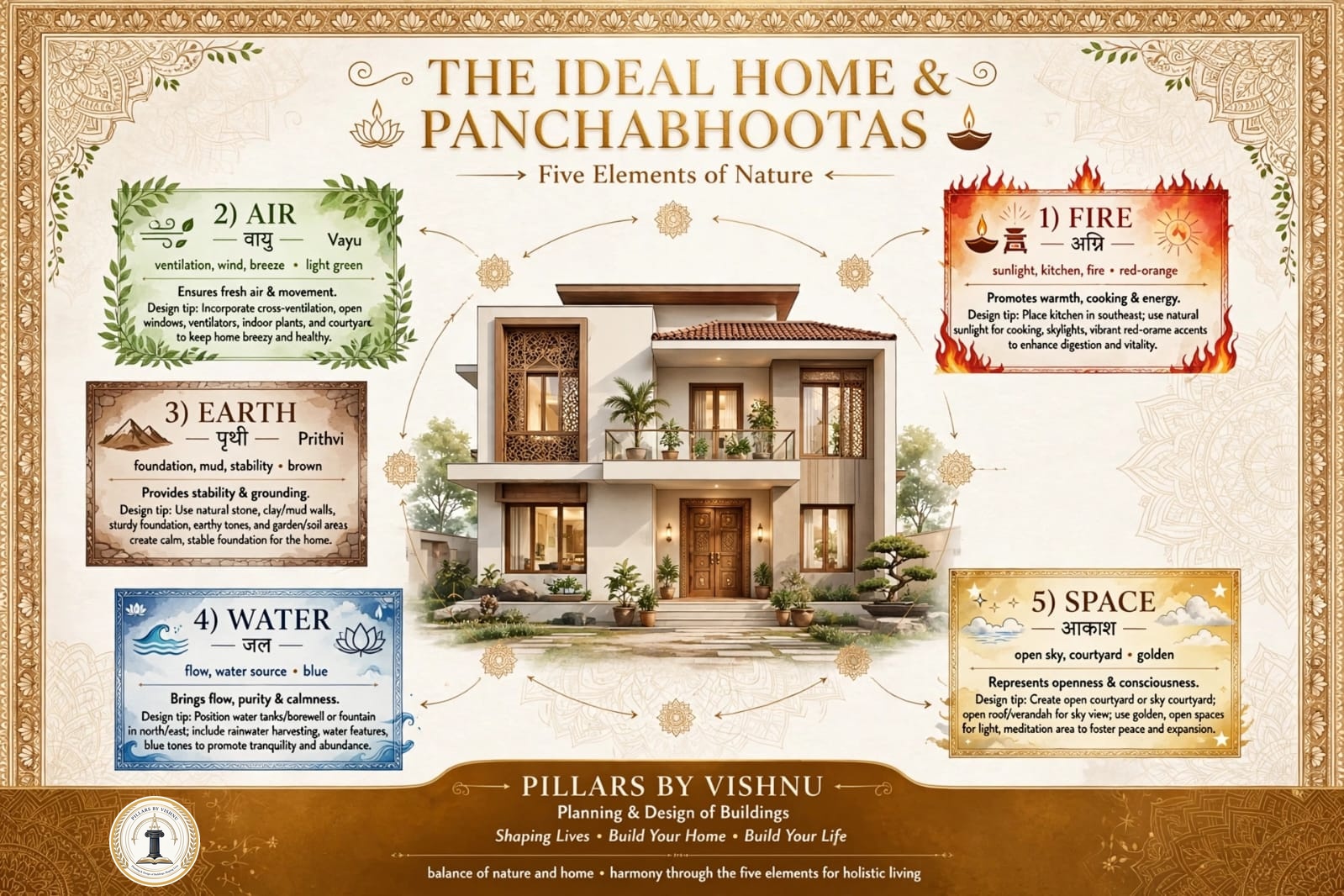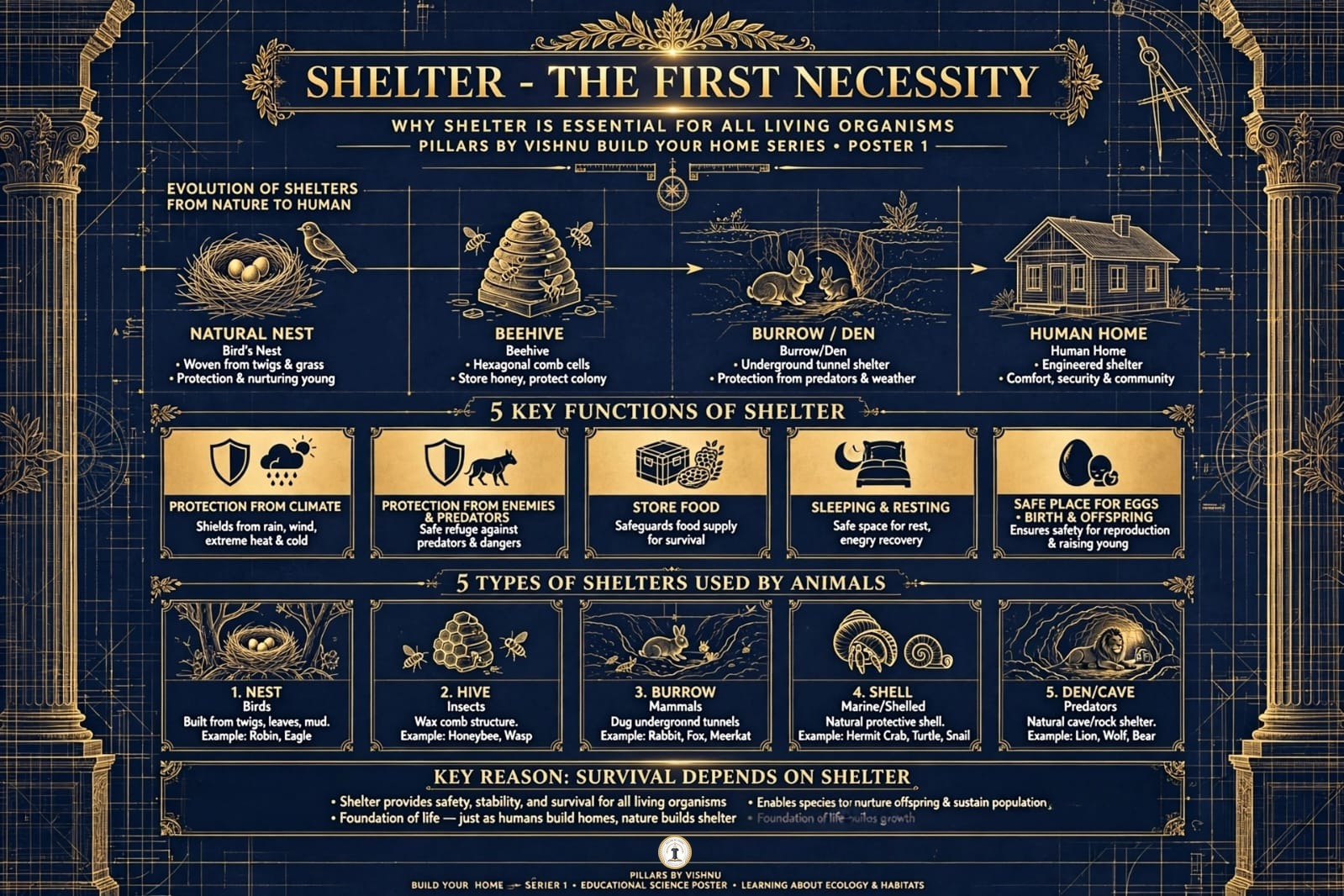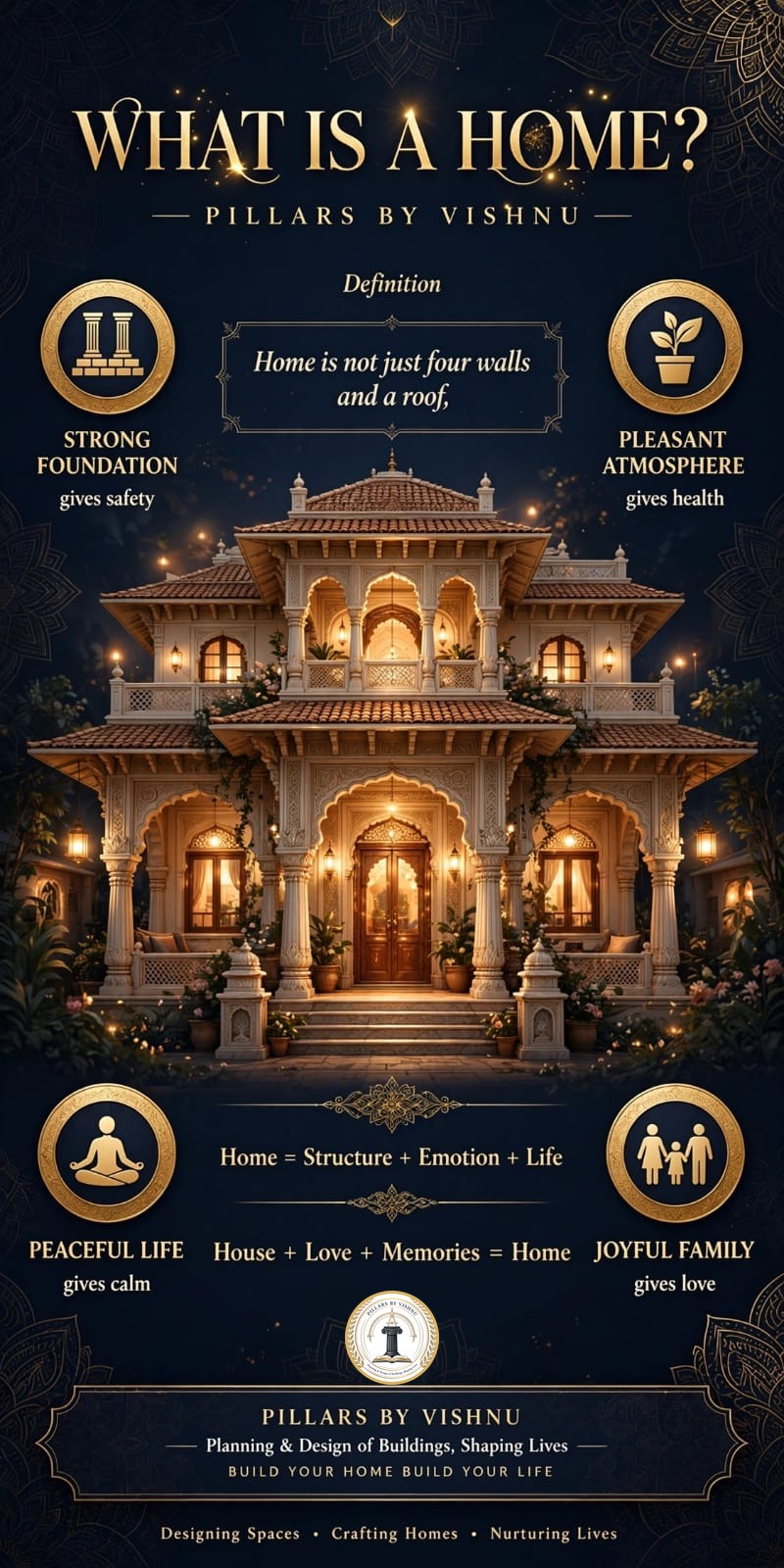
Human history is not written only in books. It is written in our homes. Every shelter we built tells us what we feared, what we valued, and what we dreamed. At Pillars by Vishnu, we study this evolution because we believe the future home must carry the wisdom of the past.
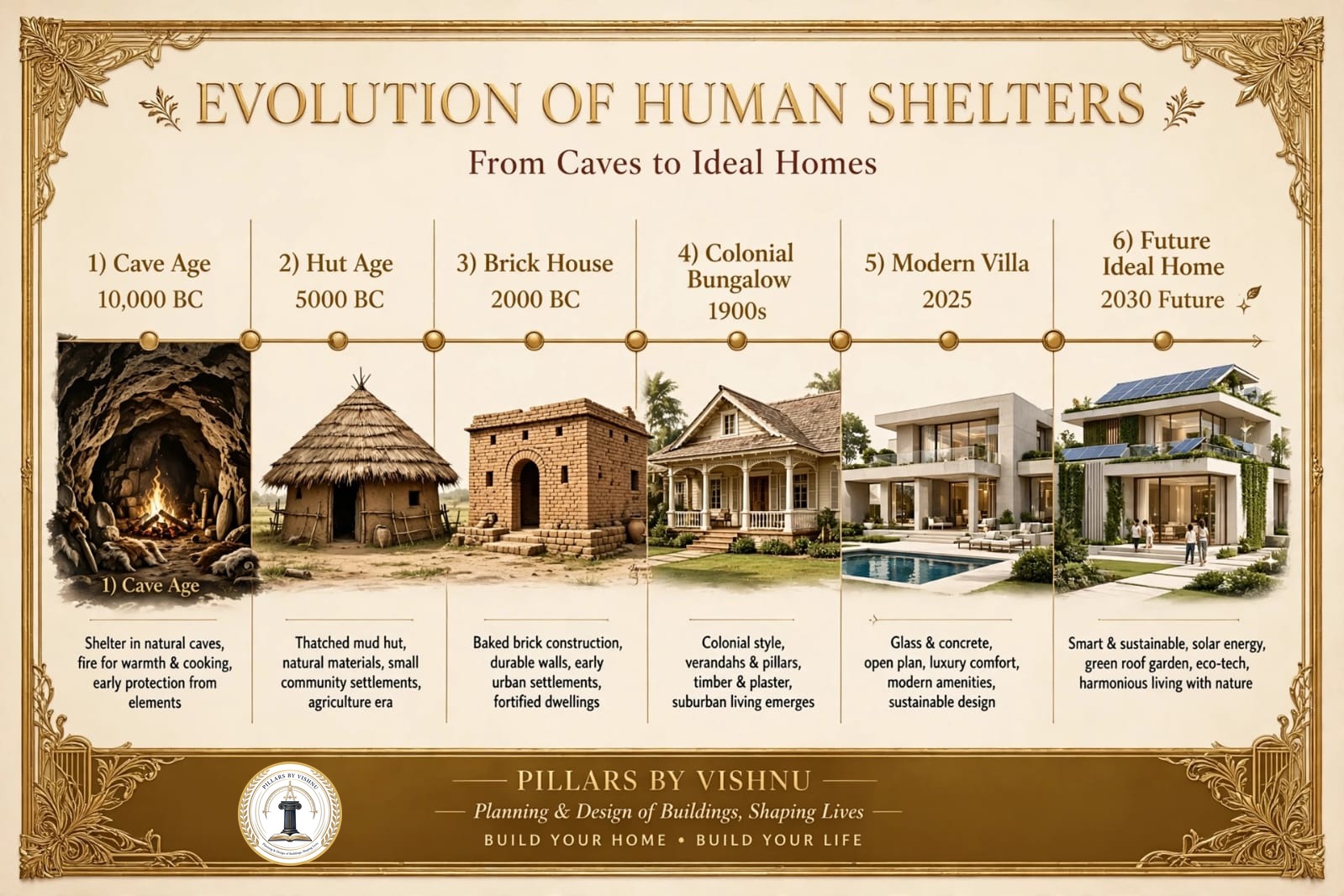
Let us walk through 12,000 years of journey, as shown in our Evolution Timeline.
1) Cave Age - 10,000 BC - Shelter as Survival
The first home was not built, it was found. Man lived in natural caves for protection from wild animals, rain, and cold. Fire was the first technology - for warmth, cooking, and safety. There was no design, no Vastu, no ownership. Only one question: Will I be alive till morning?
Learning for Today: Even today, the core purpose of a home is protection. A home that does not make you feel safe has failed at its first duty. Strength, safety, and shelter from elements - this is Dharma of a home.
2) Hut Age - 5000 BC - Shelter as Settlement
When humans learned agriculture, we stopped wandering. We needed to stay near our fields. We built huts with natural materials - mud, bamboo, thatch, straw. Small community settlements started. Agriculture era began. Home became family unit and community identity.
Learning for Today: Sustainability is not modern, it is ancient. Our ancestors built with local materials that breathed and returned to earth.
3) Brick House - 2000 BC - Shelter as Civilization
With baked bricks, we invented durability. Walls became strong, permanent, and fortified. Early urban settlements like Mohenjo-daro and Harappa showed planned houses, drainage, and streets. Home became city. Shelter became civilization. We started thinking about privacy, storage, and social status.
Learning for Today: This is when quality construction started. Strong foundation, durable walls, early urban planning - the principles of structural integrity we still follow. A home should last generations, not just years.
4) Colonial Bungalow - 1900s - Shelter as Culture
The colonial bungalow brought style, verandahs, pillars, timber, and plaster. This was the birth of suburban living. Homes were not just for staying, they were for showing culture, hierarchy, and lifestyle. The verandah became a space for social interaction - the space between home and world.
Learning for Today: This is where Pillars got its name! The pillar and verandah culture of India teaches us that a home must have transition spaces - where family connects with nature and community. A home without a verandah, balcony, or courtyard is disconnected from life.
5) Modern Villa - 2025 - Shelter as Luxury & Comfort
Today's villa is about open plan, glass facades, luxury comfort, modern amenities, and sustainable design. Concrete, steel, and glass allow big openings, natural light, and minimal design. Comfort, technology, and aesthetics dominate. But often, we lost family togetherness in open plans and lost peace in pursuit of luxury.
Learning for Today: Modern villas give us technology and comfort, but they must not lose warmth.
6) Future Ideal Home - 2030 Future
The Ideal Home of 2030 is smart and sustainable. Solar energy for power, green roof garden for cooling and oxygen, eco-tech for water saving, and harmonious living with nature. It is not just a building; it is a living system that nurtures the family, respects the earth, and supports a peaceful, joyful life.
This home balances all Four Purusharthas:
- Dharma: Ethical, eco-friendly, responsible living
- Artha: Energy-efficient, asset value, resource stewardship
- Kama: Beautiful, comfortable, joyful spaces for family
- Moksha: Peaceful, healthy, harmonious with nature
This is the final evolution - From Cave to Consciousness.
From Survival to Significance.
Conclusion: What Does This Evolution Teach Us?
1. We started by seeking protection, now we seek purpose. A home today must do more than protect - it must nurture.
2. We started with natural materials, we are returning to them. True future is not artificial, it is natural and smart.
3. We started living together in communities, we must not live alone now. A joyful family is the final evaluation of any shelter.